
STYLE & MOVEMENT
Watch types
Explore watches by movement, display and design. Choose the ownership routine and proportions you prefer before narrowing the reference.
35 buying guidesBrowse this collection
-
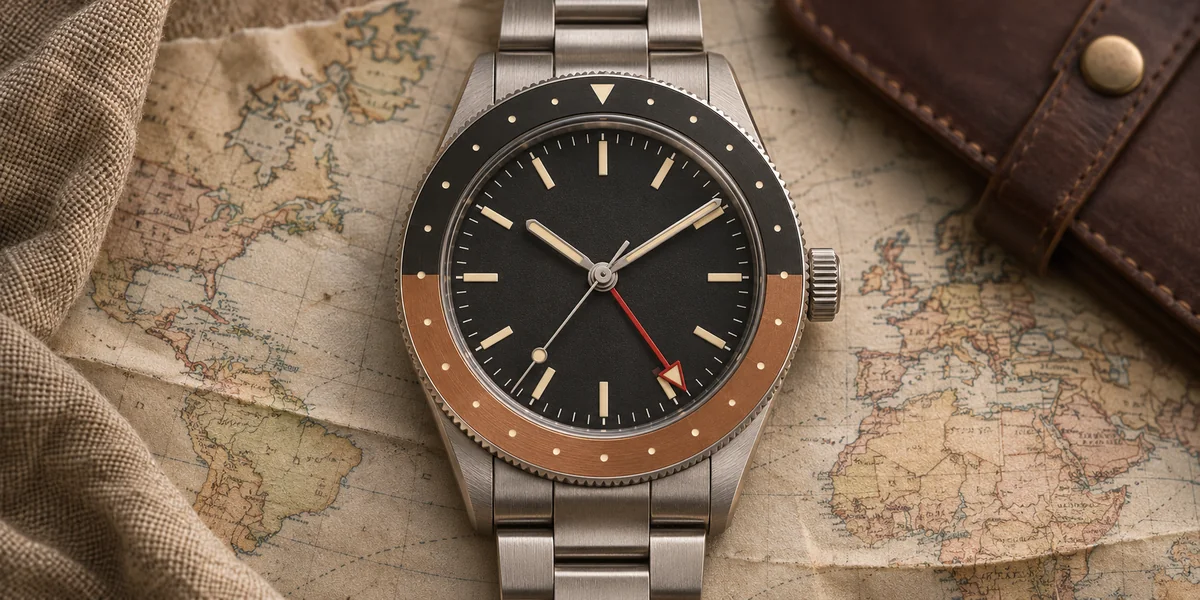
Buying guide
5 GMT watches for tracking another time zone
Compare five watches with an additional time-zone function, spanning automatic, solar and quartz designs. Case size and how you set the second time are the useful starting points.
Read the guide -
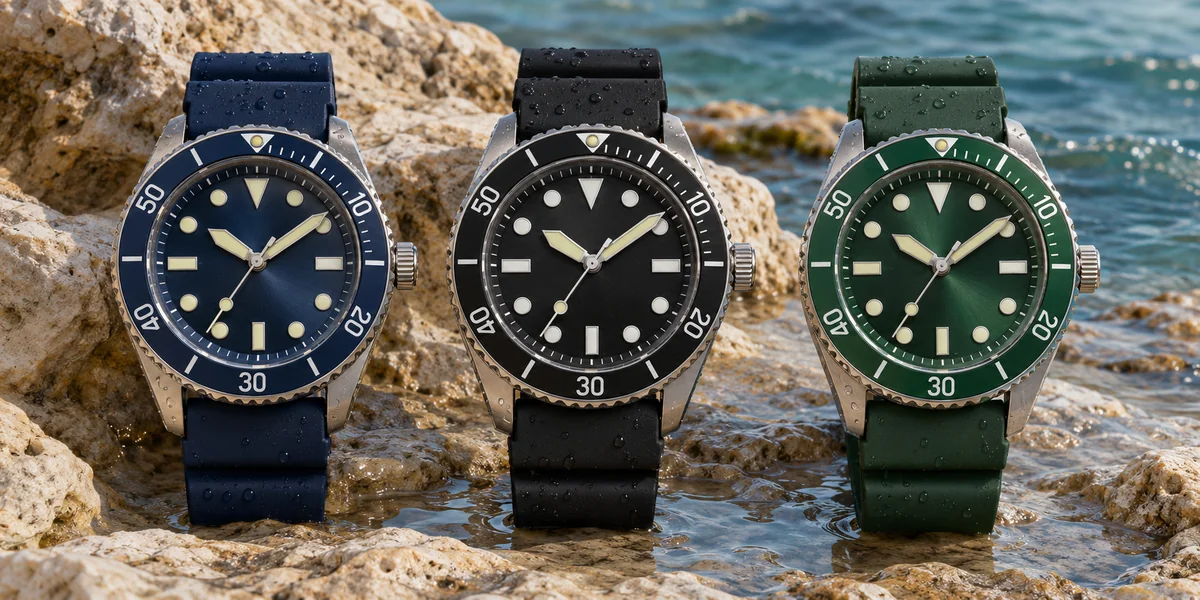
Buying guide
5 affordable dive-style watches compared
Compare five lower-cost analog watches with different movements, crystals and water-use claims. Distinguish a dive-style design from a manufacturer-supported diving watch before taking it underwater.
Read the guide -
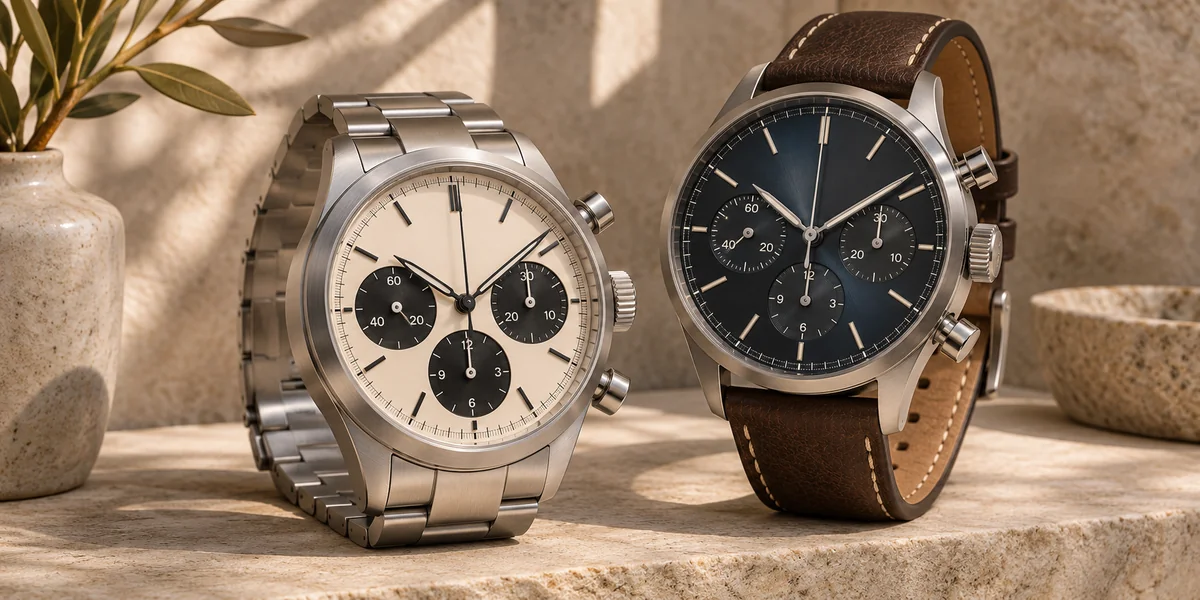
Buying guide
Chronograph watches under $1,000 compared
Three chronographs to compare against a $1,000 budget. Look at the timing controls, case dimensions and movement before deciding which one belongs on your wrist.
Read the guide -
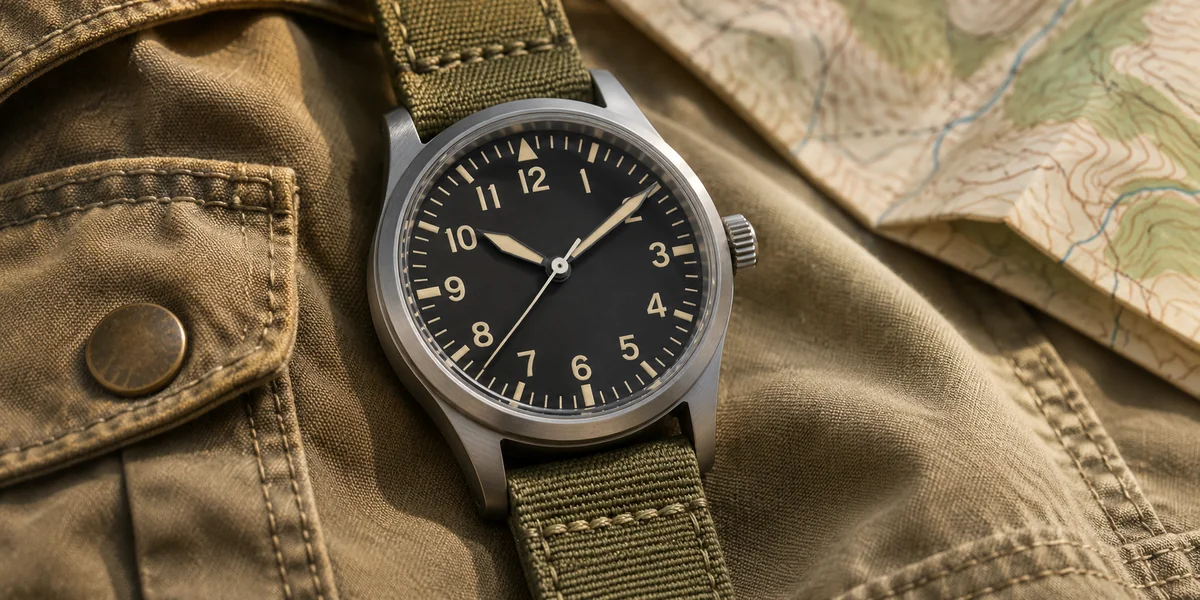
Buying guide
Field watches under $500 for everyday wear
Five field-style watches to compare with a $500 ceiling, from simple quartz to automatic and light-powered models. Start with fit and readability, then consider the ownership routine.
Read the guide -
Buying guide
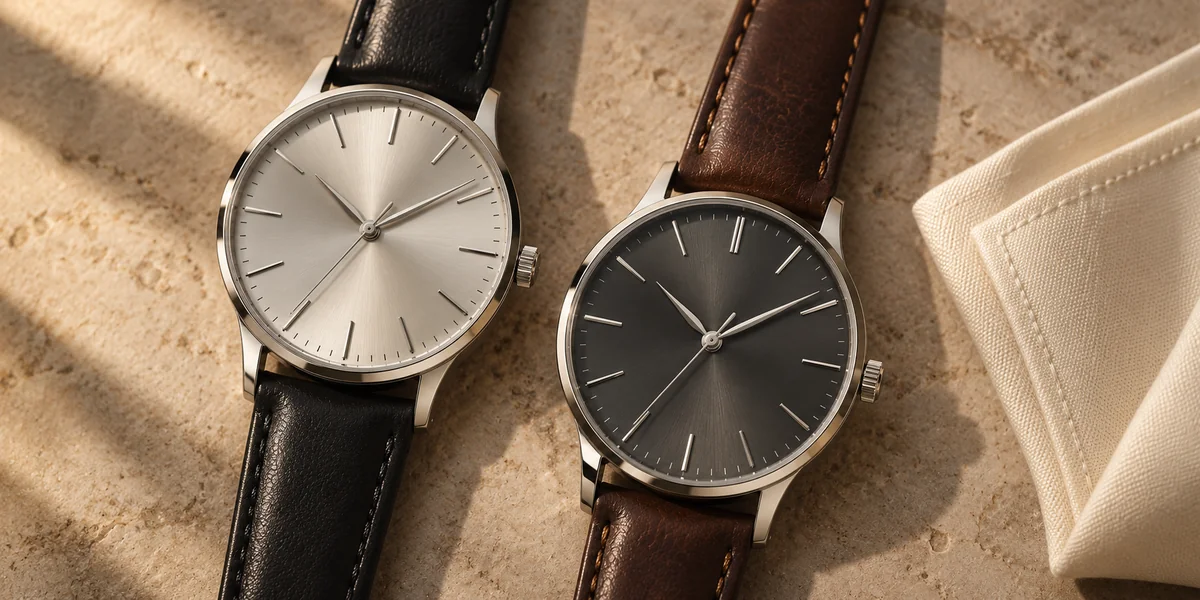
Dress watches under $1,000 compared
Compare five dress-watch designs with a $1,000 budget in mind. Dial clarity, sleeve clearance and the movement you want to maintain matter more than an elaborate product name.
Read the guide -
Buying guide
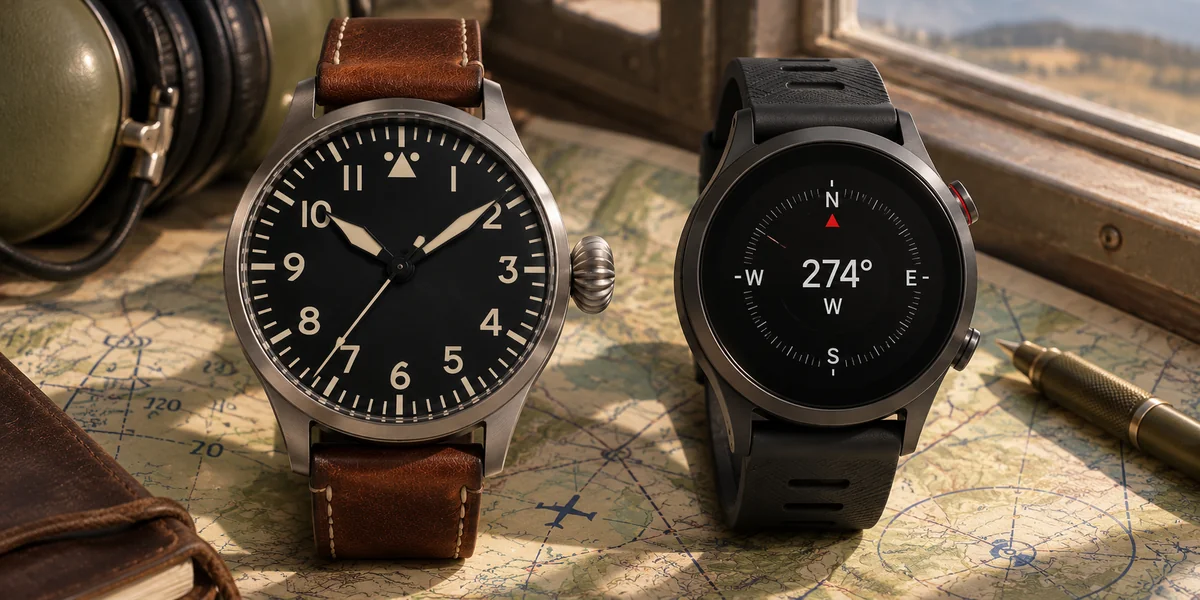
Pilot watches from analog dials to aviation smartwatches
Compare five aviation-inspired and aviation-focused watches. A traditional pilot dial and a connected flight tool serve different needs, so start with the function rather than the label.
Read the guide -
Buying guide
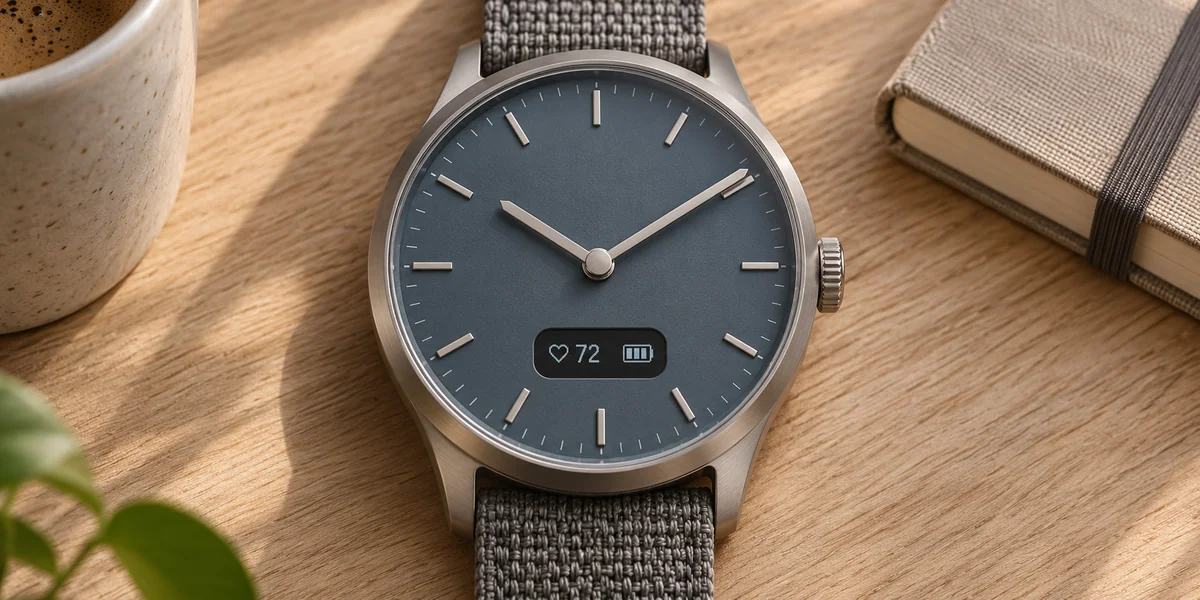
Hybrid watches with analog hands and connected features
Five hybrid watches that combine a traditional-looking face with connected functions. Compare the actual display, tracking method and charging routine rather than treating all hybrids alike.
Read the guide -
Buying guide
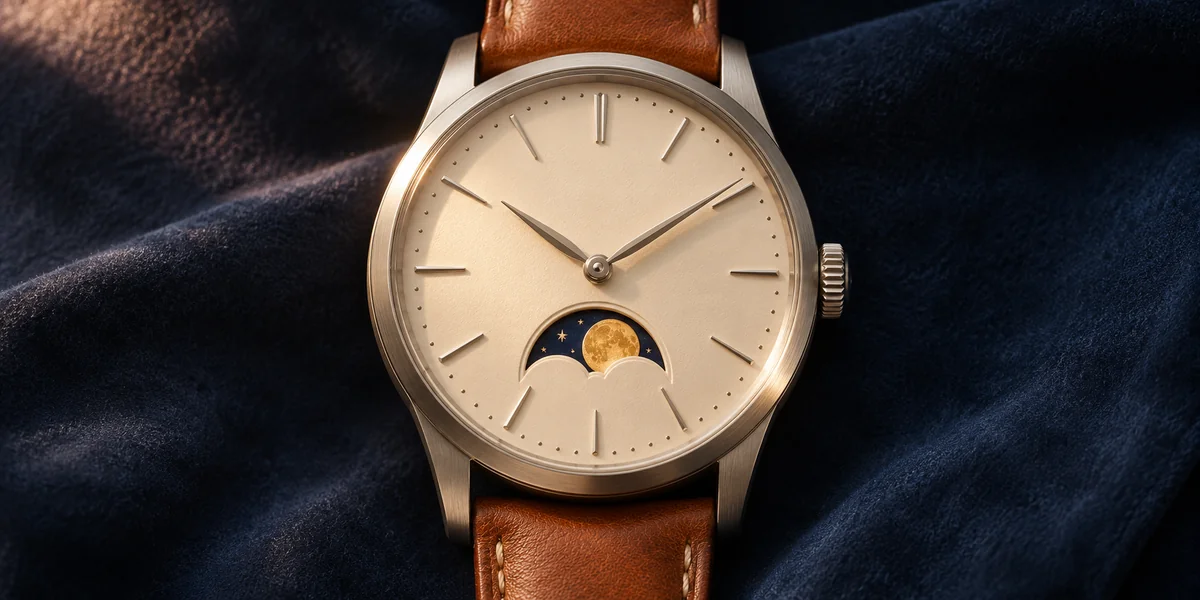
Affordable moon-phase watches and setting requirements
Five watches with lunar displays, spanning simpler quartz designs and light-powered models. Compare the actual moon-phase function and setting procedure before choosing the dial.
Read the guide -
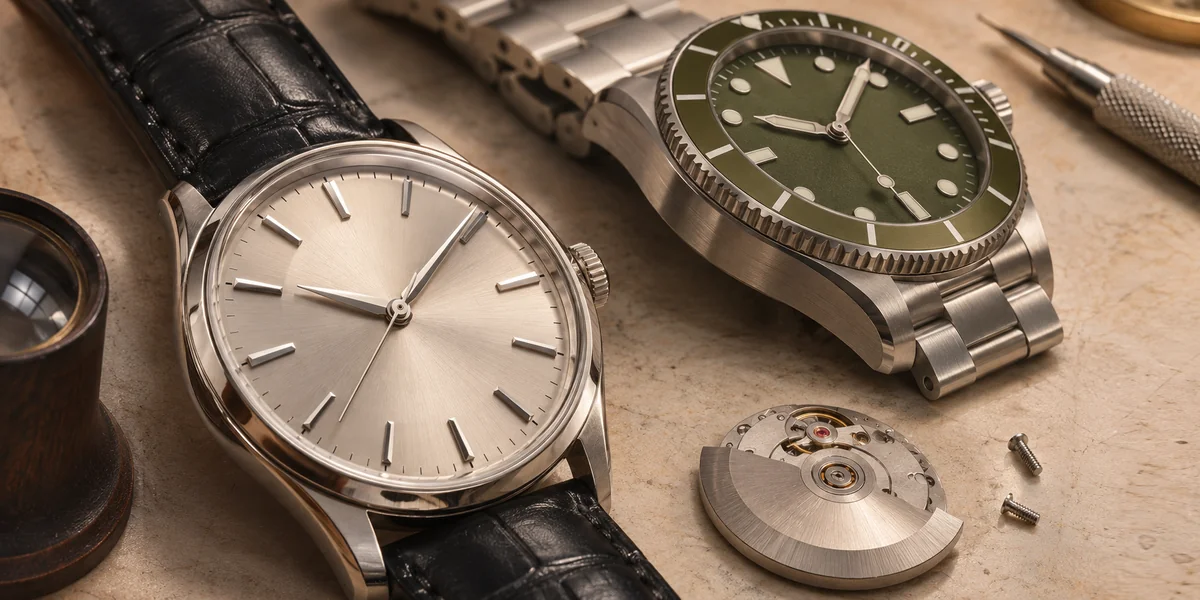
Buying guide
Automatic watches from dress to sports designs
Five mechanical watches with different styles, dimensions and ownership costs. Choose the one you will enjoy wearing and maintaining, rather than treating automatic as a single quality level.
Read the guide -
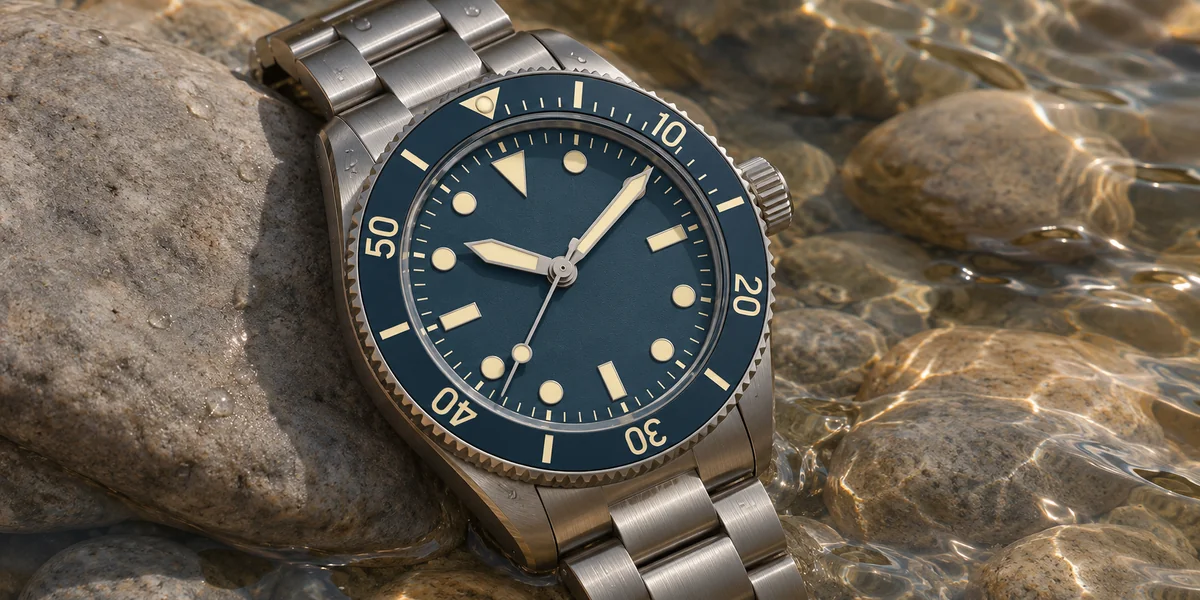
Buying guide
Dive watches under $500 with exact-model checks
Five water-oriented watch references to compare with a $500 ceiling. Separate price, condition and documented water use before deciding which model suits your plans.
Read the guide -
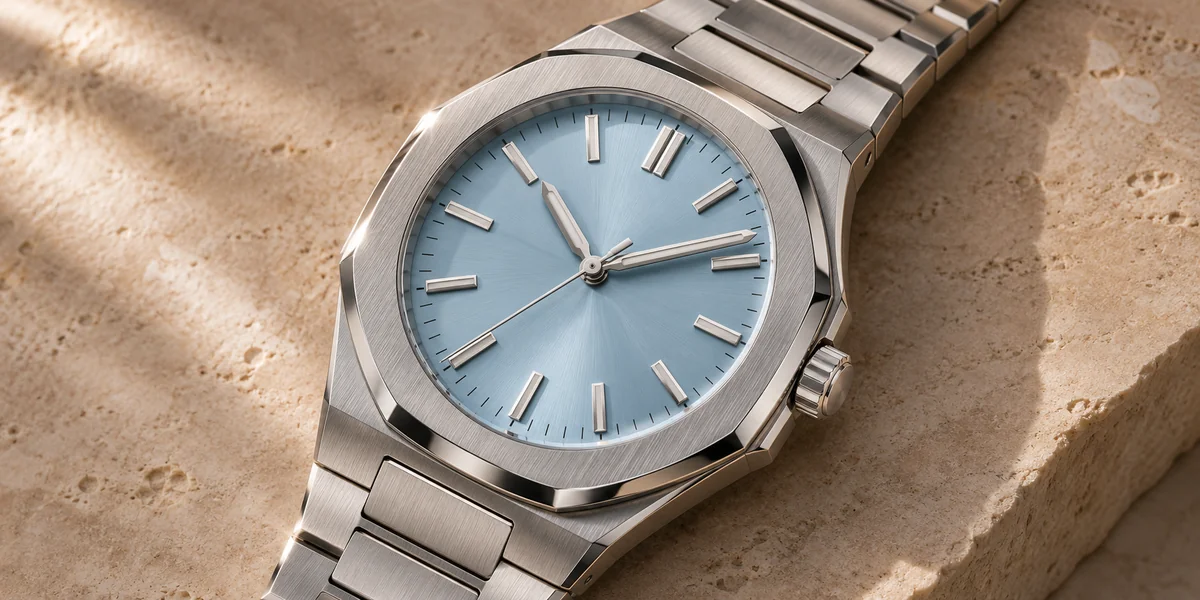
Buying guide
Luxury sports watches with seller and service checks
Three higher-value sports-watch references with different movements and intended uses. Exact reference, authenticity, condition and warranty deserve as much attention as the dial.
Read the guide -
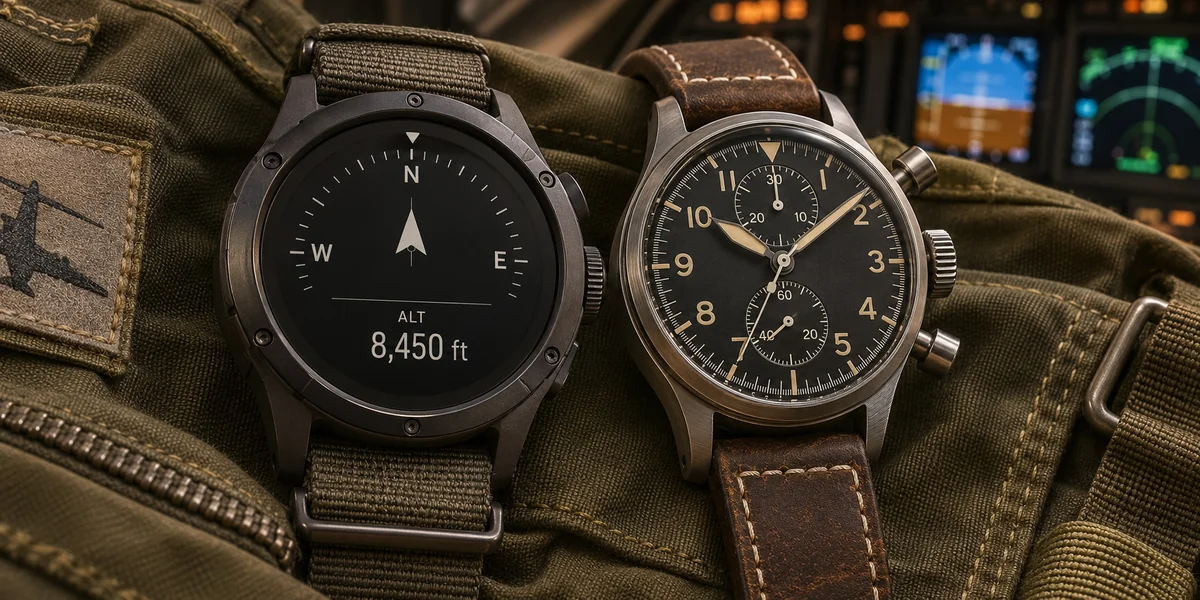
Buying guide
Aviator watches: traditional dials and connected flight tools
Five aviation-themed choices, from analog timepieces to Garmin flight-focused smartwatches. Decide whether you want the visual style or specific connected aviation functions.
Read the guide -
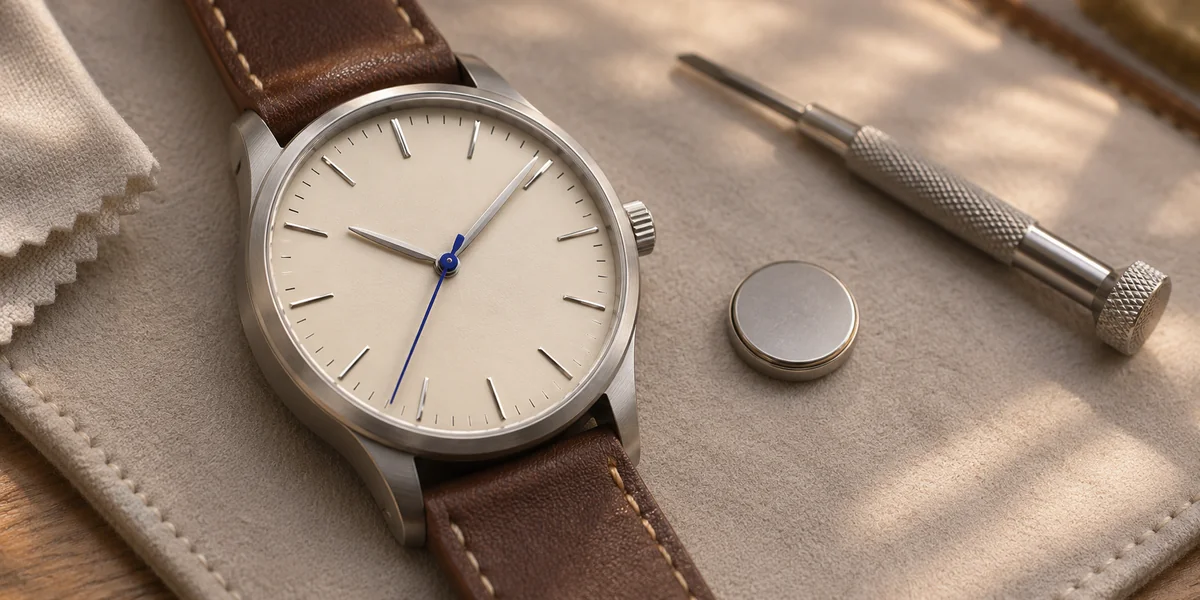
Buying guide
Quartz watches: straightforward timekeeping compared
Five quartz choices, including a light-powered Citizen. Compare dial clarity, case shape and battery or charging requirements rather than treating all quartz watches as the same.
Read the guide -
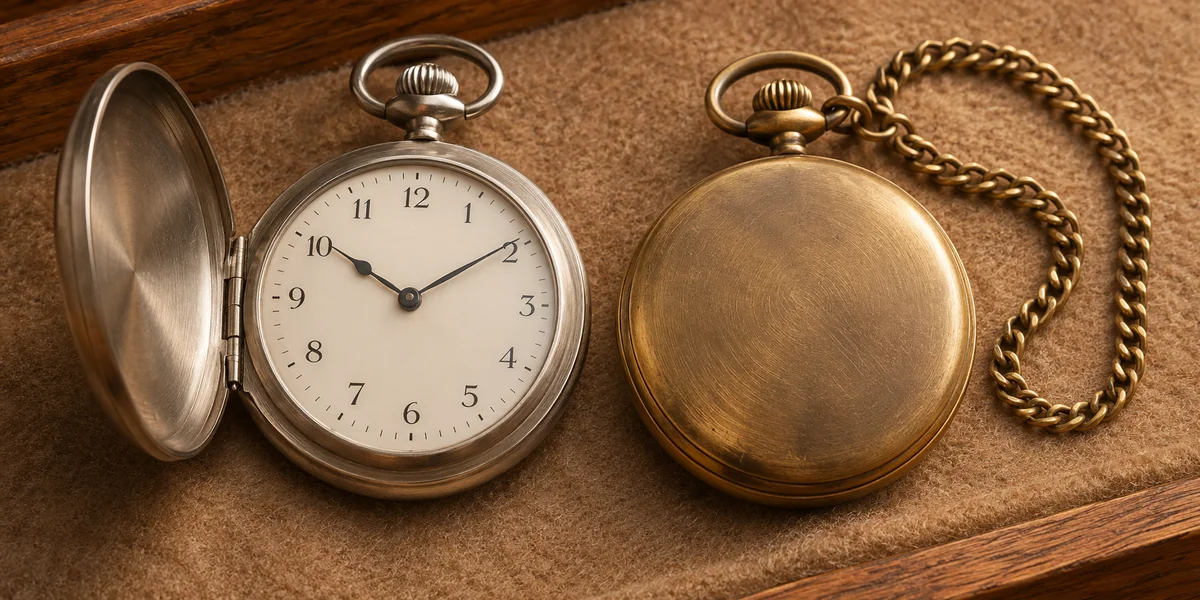
Buying guide
Pocket watches: quartz and hand-wound choices
Three Gotham pocket watches with different displays, cases and winding routines. Start with how you will carry and read the watch, then choose the mechanism you want to maintain.
Read the guide -
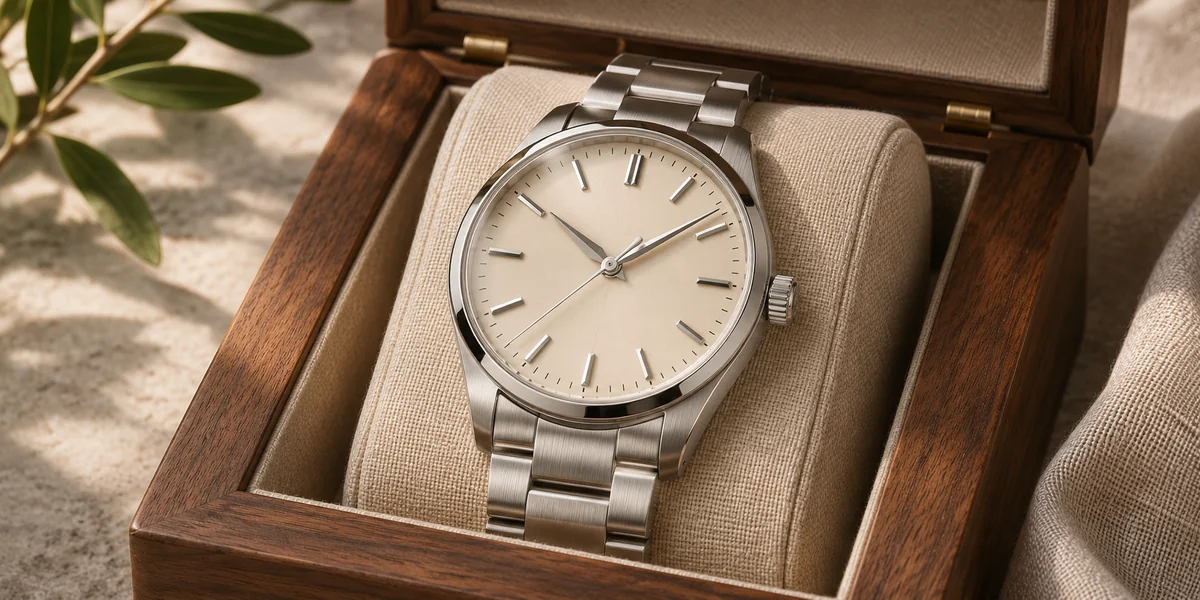
Buying guide
Entry-level luxury watches: practical ownership comparisons
Five higher-end watch references with different movements, designs and costs. Choose the watch you want to wear and maintain, then examine the seller and warranty as carefully as the dial.
Read the guide -
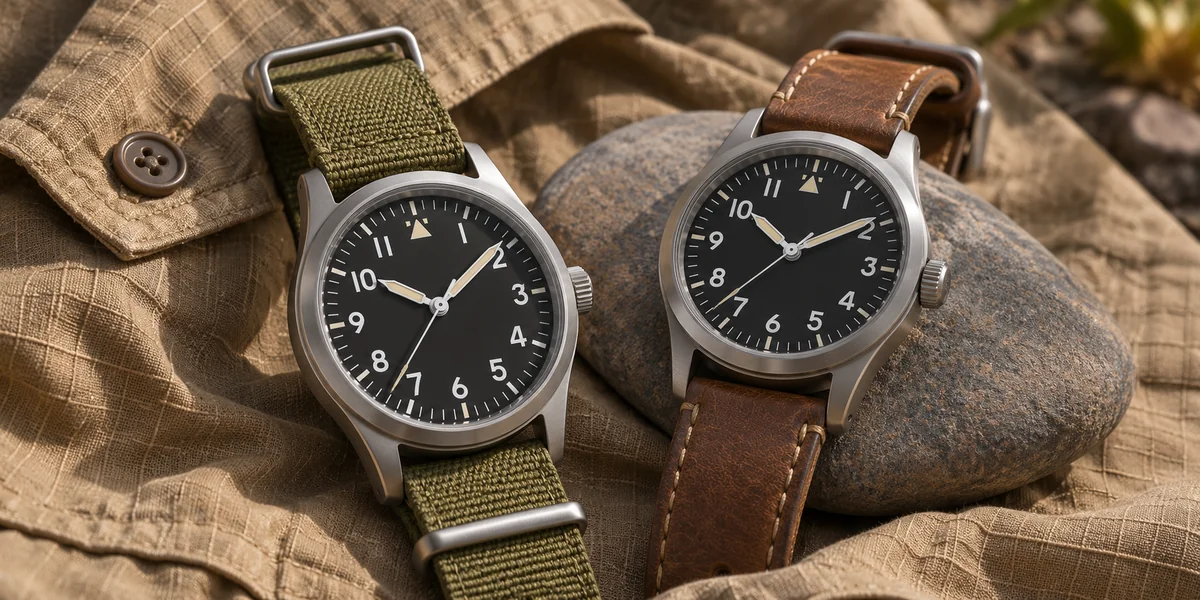
Buying guide
Field watches: automatic, solar and quartz options
Five field-style watches with different movements, straps and proportions. Compare legibility and everyday comfort before choosing military-inspired styling or a collection name.
Read the guide -
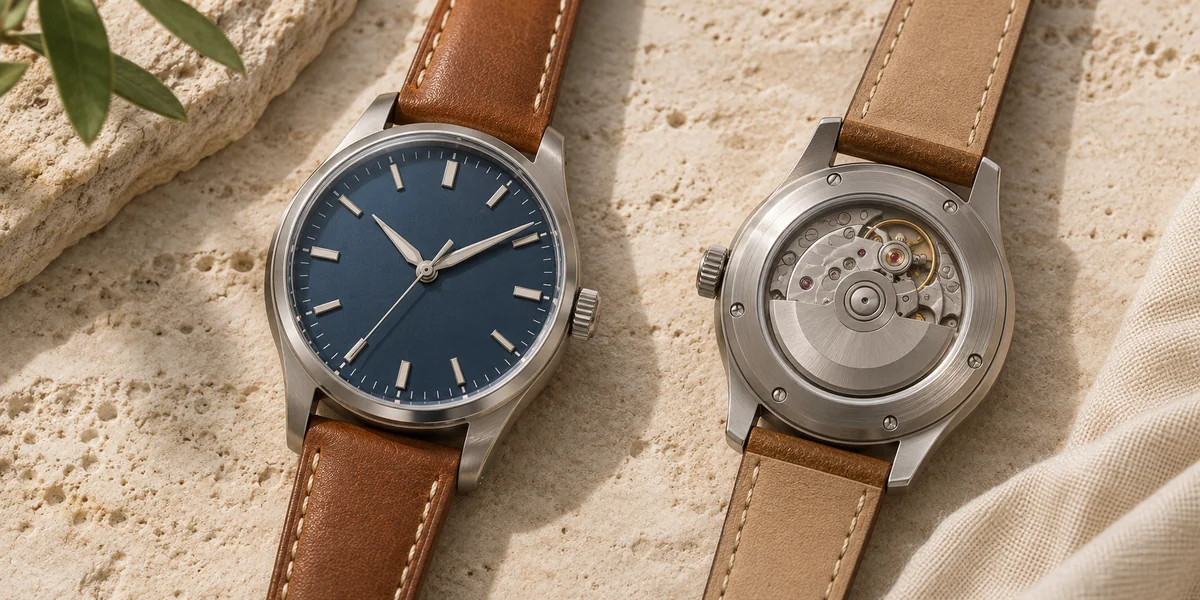
Buying guide
Automatic watches under $500: fit and movement choices
Five automatic watch references to assess against a $500 budget. Compare fit, dial style and the exact current offer, with room for delivery and the longer-term maintenance routine.
Read the guide -
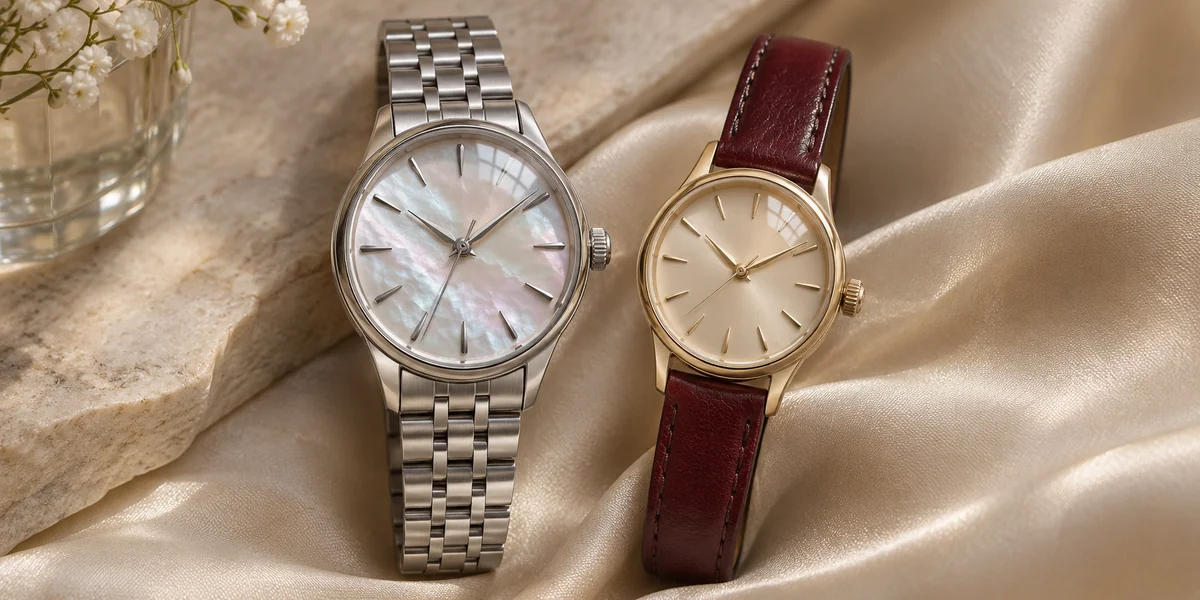
Buying guide
Women’s automatic watches: compact and dress references
Five automatic references commonly listed in women’s collections, with different sizes and finishes. Compare the actual case, bracelet range and movement routine rather than relying on a category label.
Read the guide -
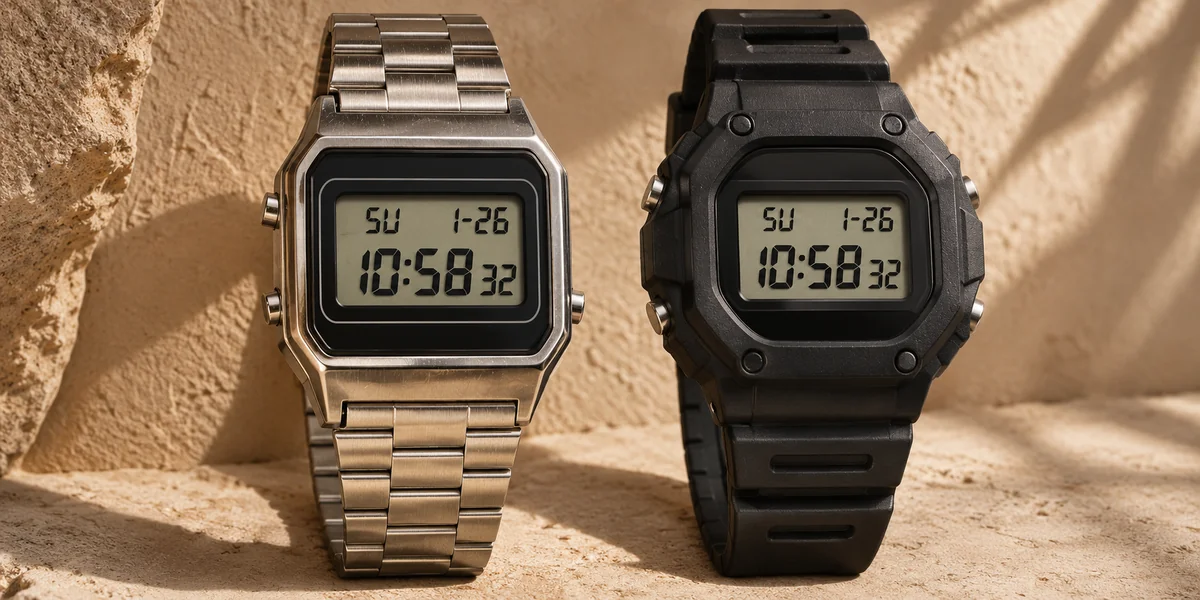
Buying guide
Digital watches: displays, timers and everyday controls
Five digital references, from small everyday displays to lap timing and calculator controls. Compare readability, button layout and case size rather than treating every LCD watch as the same practical choice.
Read the guide -
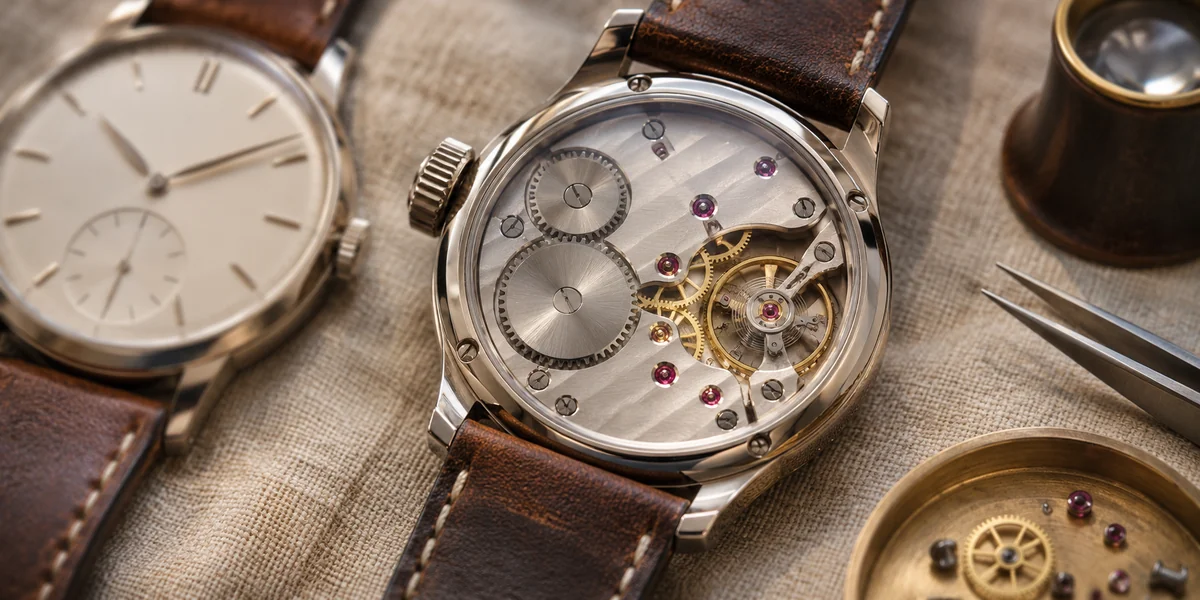
Buying guide
Mechanical watches: automatic movements and daily ownership
Five automatic mechanical watches with different dial styles, cases and straps. Compare fit and ownership demands alongside the movement, and choose a watch you will enjoy setting, wearing and maintaining.
Read the guide -

Buying guide
Minimalist watches: clear dials and practical proportions
Five restrained watches with different dial layouts, straps and power systems. Compare how clearly you can read the time, how the case sits and how much everyday maintenance you want.
Read the guide -
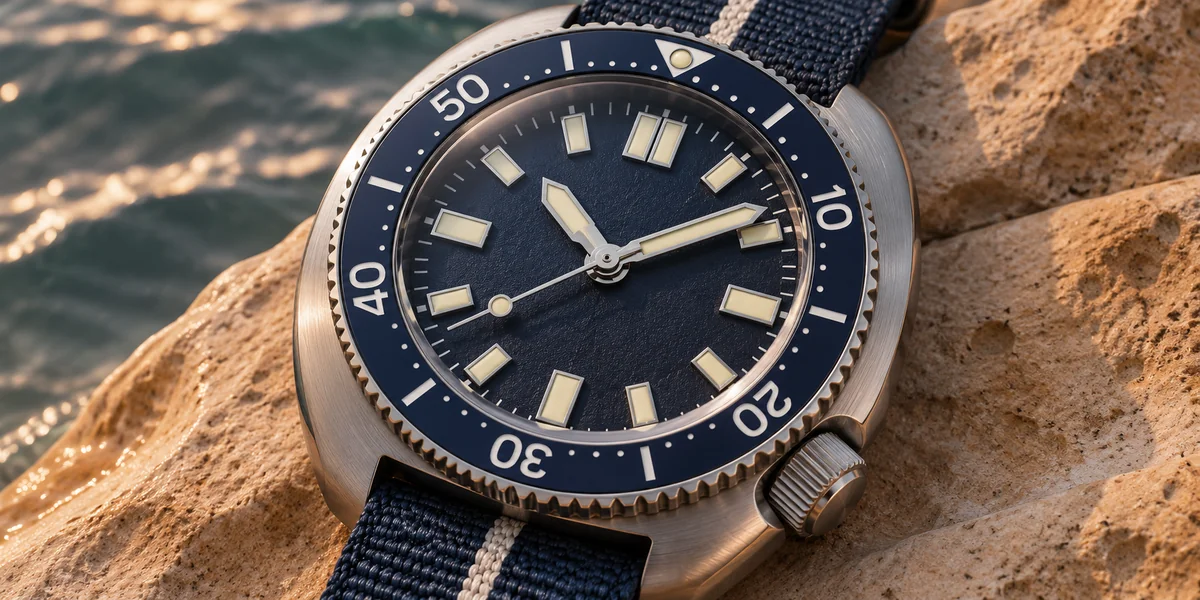
Buying guide
Seiko dive watches: exact references and everyday fit
Five Seiko references to compare by movement, dimensions and intended water use. Start with the exact model and manual, then assess case comfort, bezel controls and seller support before choosing a dive-style watch.
Read the guide -
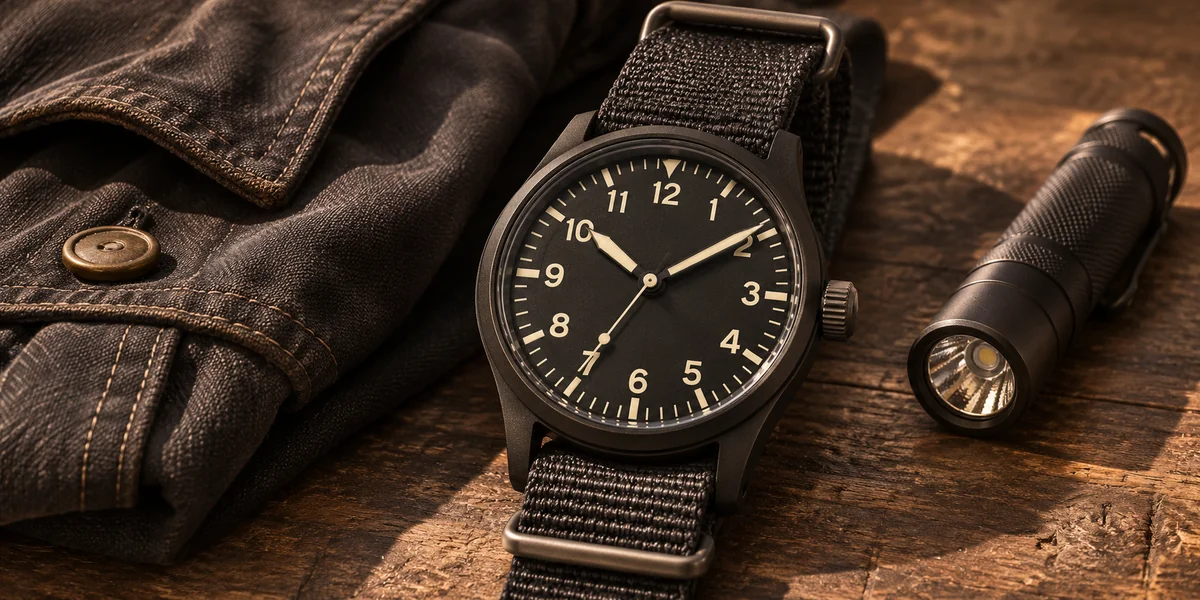
Buying guide
Watches for police officers: readability, fit and policy checks
Five practical watch references with different displays and connected capabilities. Check your department’s rules first, then compare readability, sleeve fit, controls and charging needs. No model is presented as department-approved equipment.
Read the guide -
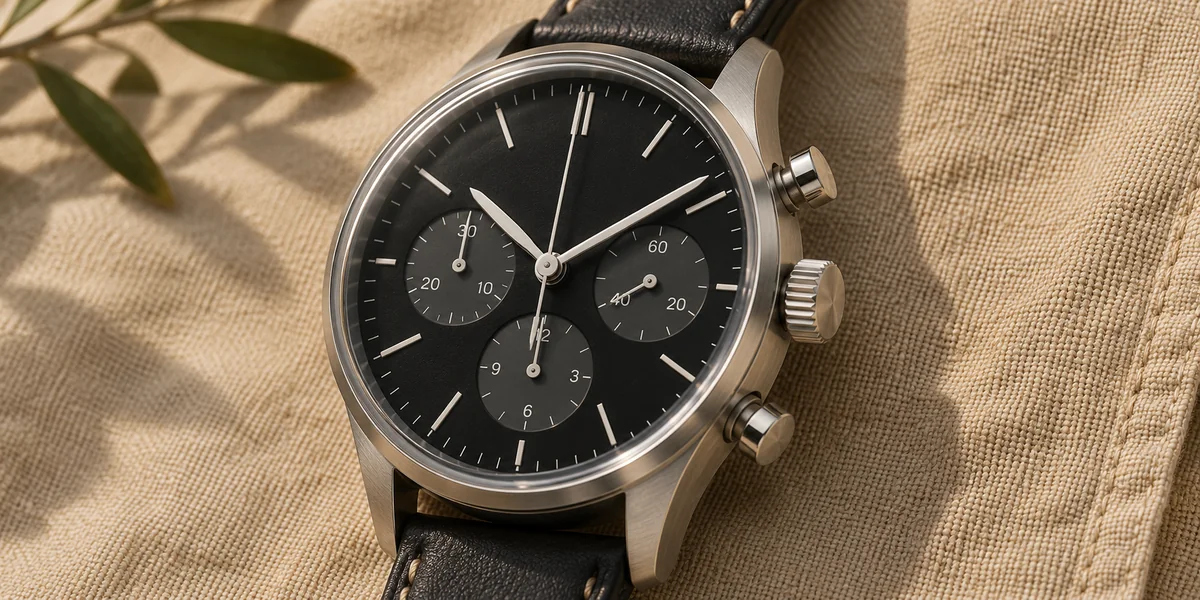
Buying guide
Chronograph watches under $500: controls and exact offers
Five chronograph references to compare against a $500 item-price ceiling. Look at dial readability, timing controls and fit, then check the complete checkout total and seller terms before committing.
Read the guide -
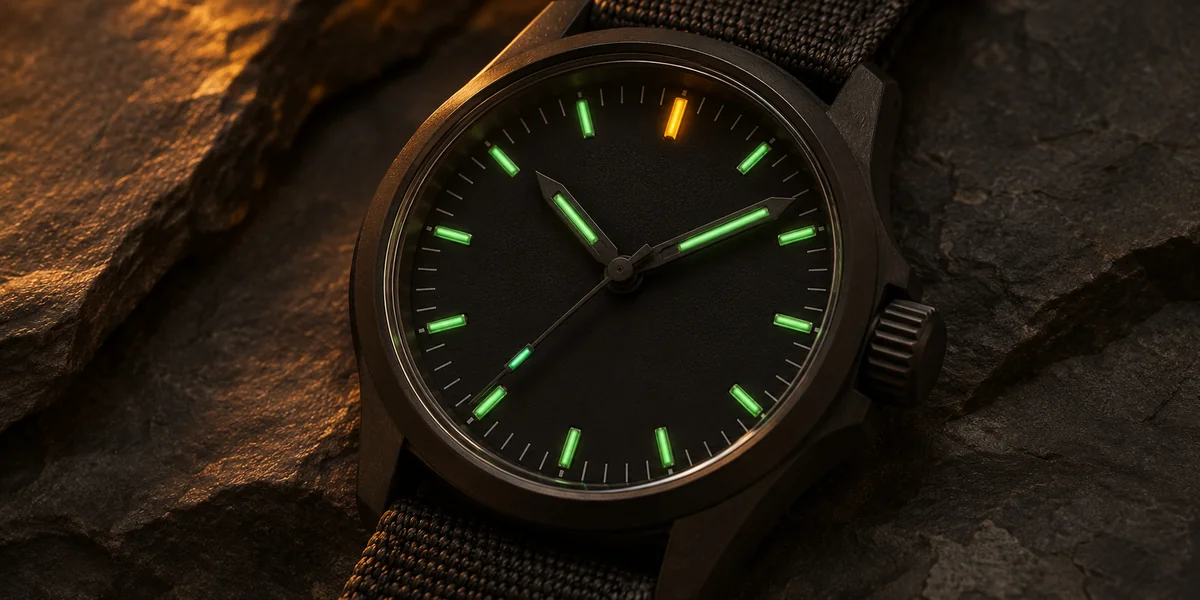
Buying guide
Tritium watches: illumination, exact references and fit
Five illuminated watch references to compare by exact model, dial contrast and case proportions. Learn how self-powered illumination differs from light-charged lume, then check seller support and long-term service considerations.
Read the guide -
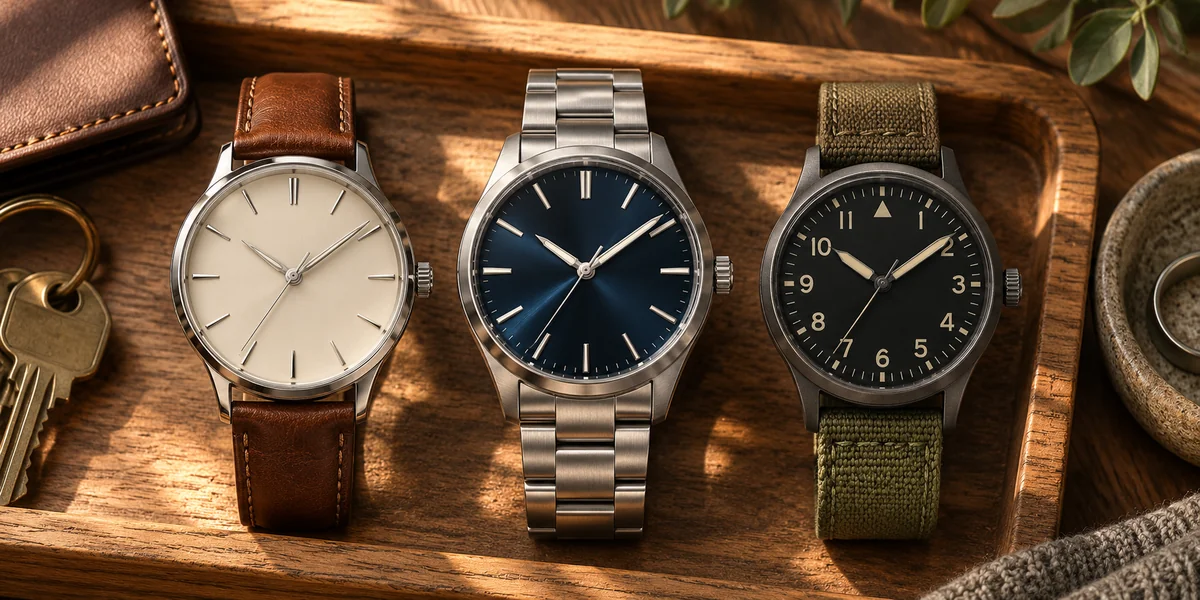
Buying guide
Watches for men: everyday fit, movement and purpose
Five different approaches to daily timekeeping, from a field automatic to a connected sports watch. Compare the size, movement and functions you want; a men’s category does not determine what fits your wrist.
Read the guide -
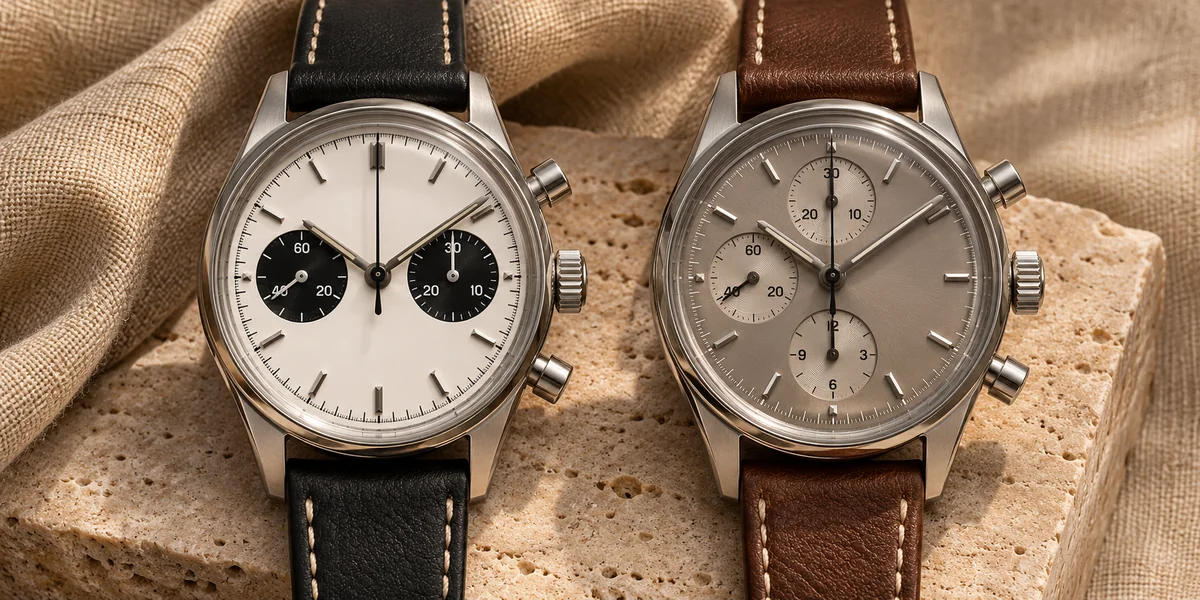
Buying guide
Chronograph watches: five ways to measure elapsed time
Five chronographs spanning quartz, solar and mechanical operation. Compare the timing display, control layout and ownership routine before choosing a reference for your wrist.
Read the guide -
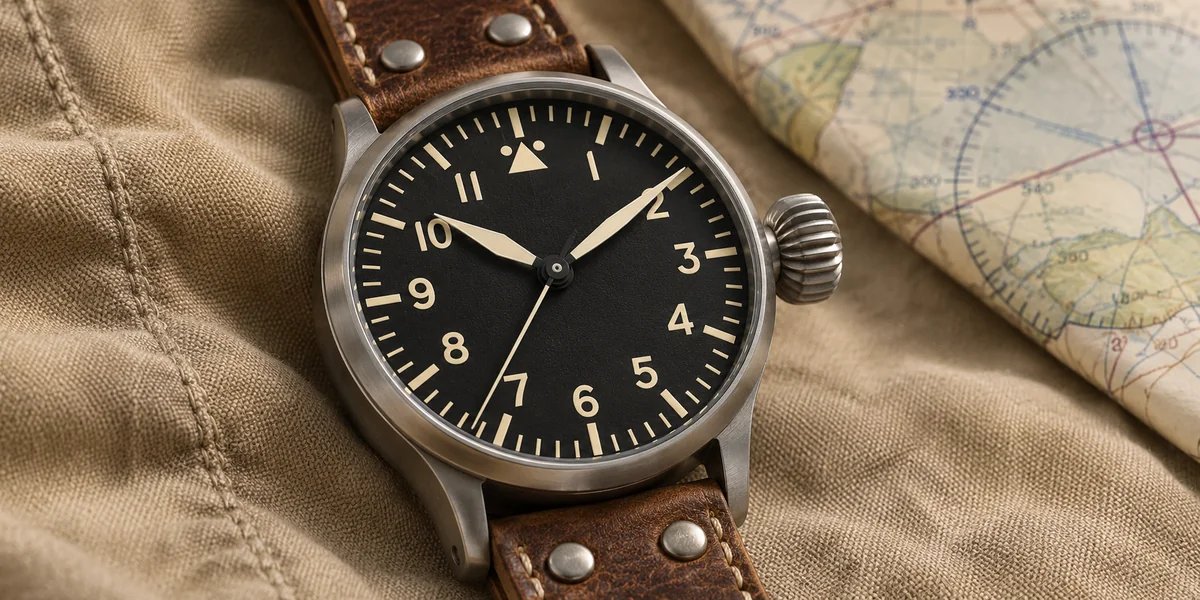
Buying guide
Pilot-style watches under $500: controls and dial choices
Five aviation-inspired references within a $500 item-price ceiling. Compare display complexity, movement and setting controls, then check the complete purchase total.
Read the guide -
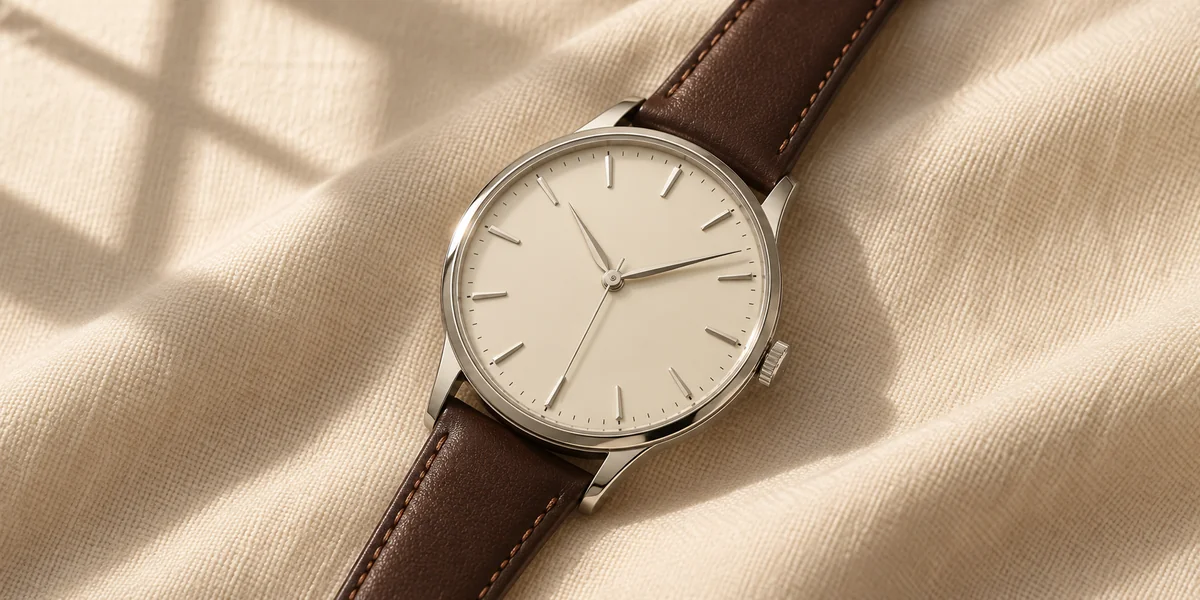
Buying guide
Dress watches under $500: fit, movement and restrained design
Five dress-oriented watches with different movements and straps. Compare the case profile, dial and ownership routine within a $500 item-price ceiling.
Read the guide -
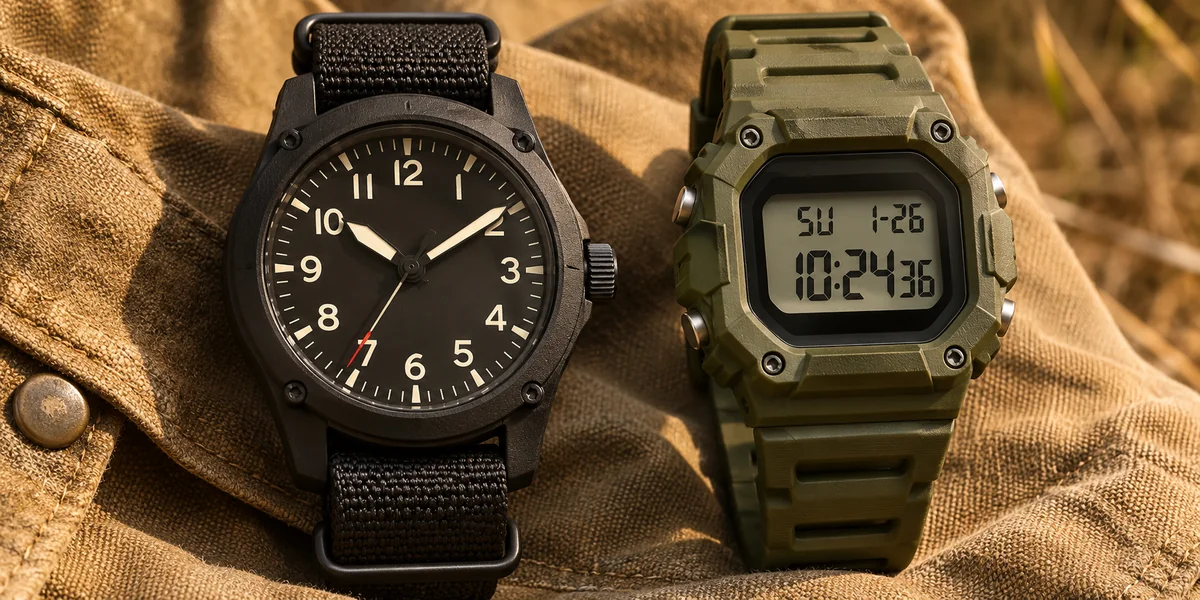
Buying guide
Military-style watches: readable displays and practical trade-offs
Five field and outdoor references with different movements, displays and connected features. Military styling or a model name does not establish official issue status or suitability for a particular role.
Read the guide -
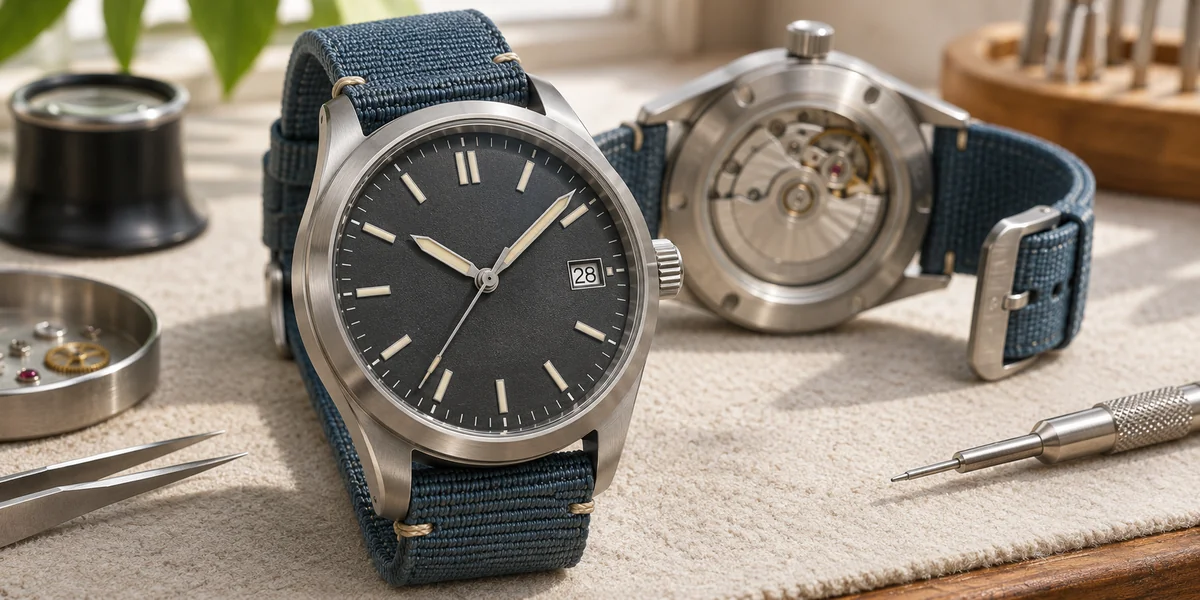
Buying guide
Automatic watches under $300: mechanical ownership on a budget
Five automatic references to compare against a $300 item-price ceiling. Look at winding behavior, fit and service needs as carefully as the dial.
Read the guide -
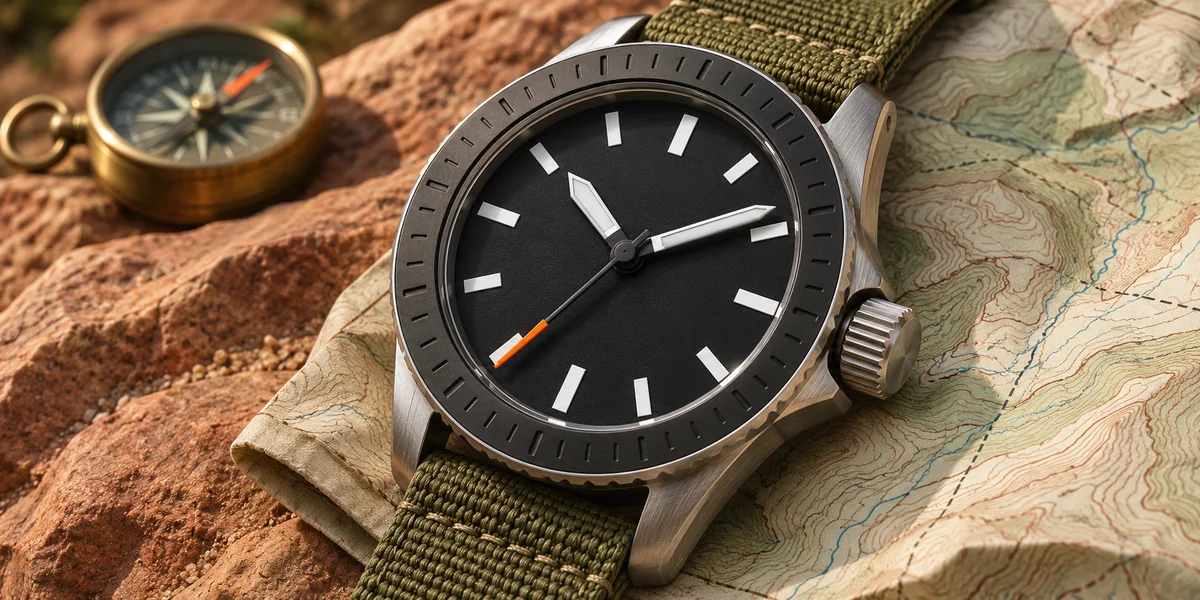
Buying guide
Tool watches: functions, controls and ownership trade-offs
Five practical watches spanning analog timing, outdoor sensors and connected sports tools. Decide which information you need and how you will operate the watch before comparing style.
Read the guide -
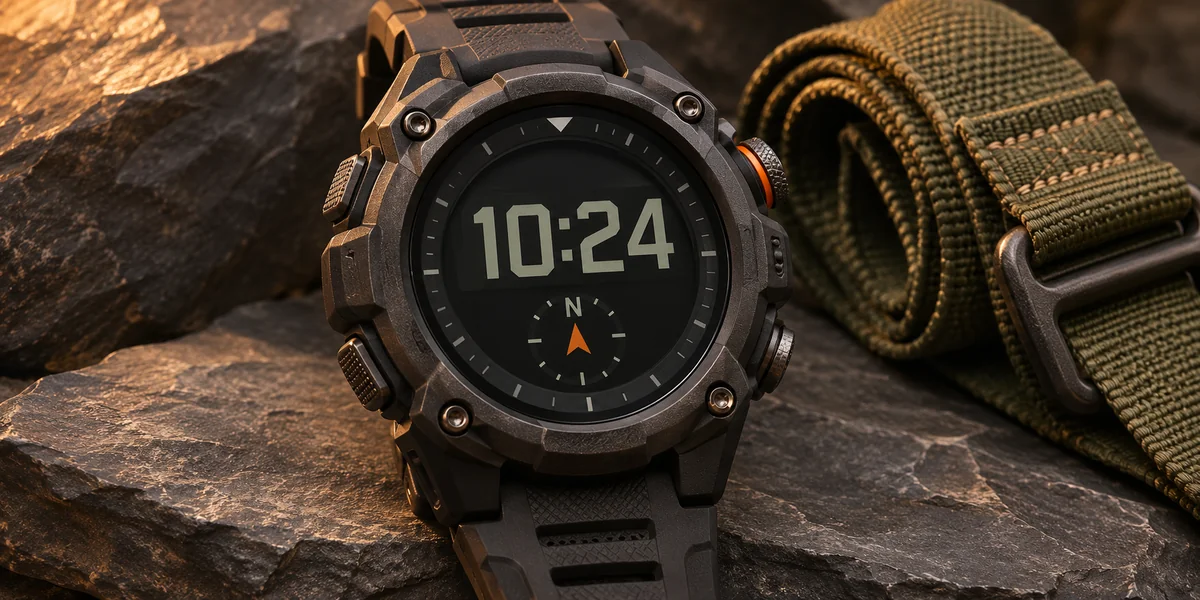
Buying guide
Tactical watches: controls, sensors and connected-feature limits
Five outdoor references with different sensors, displays and connectivity. Compare the functions you need and the rules of your setting; a tactical label is not a guarantee of suitability.
Read the guide -
Buying guide
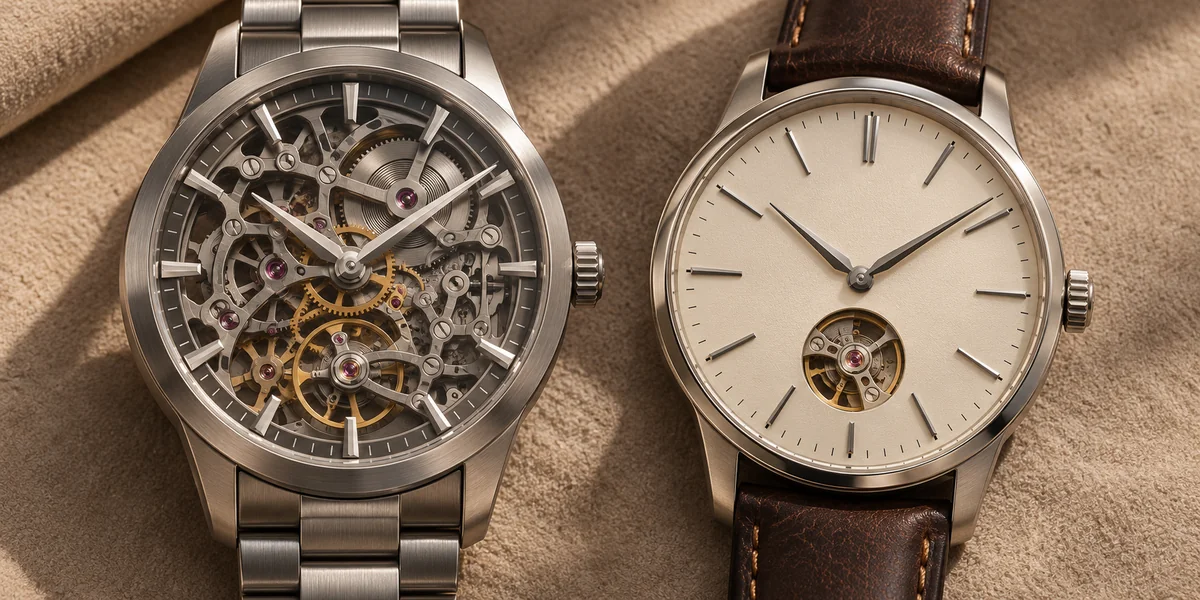
Skeleton and open-heart watches: visible movement and readability
Five mechanical watches with different amounts of exposed movement. Compare readability, case proportions and maintenance as well as the visible gears; an open-heart aperture differs from a fully skeletonized dial.
Read the guide -
Buying guide
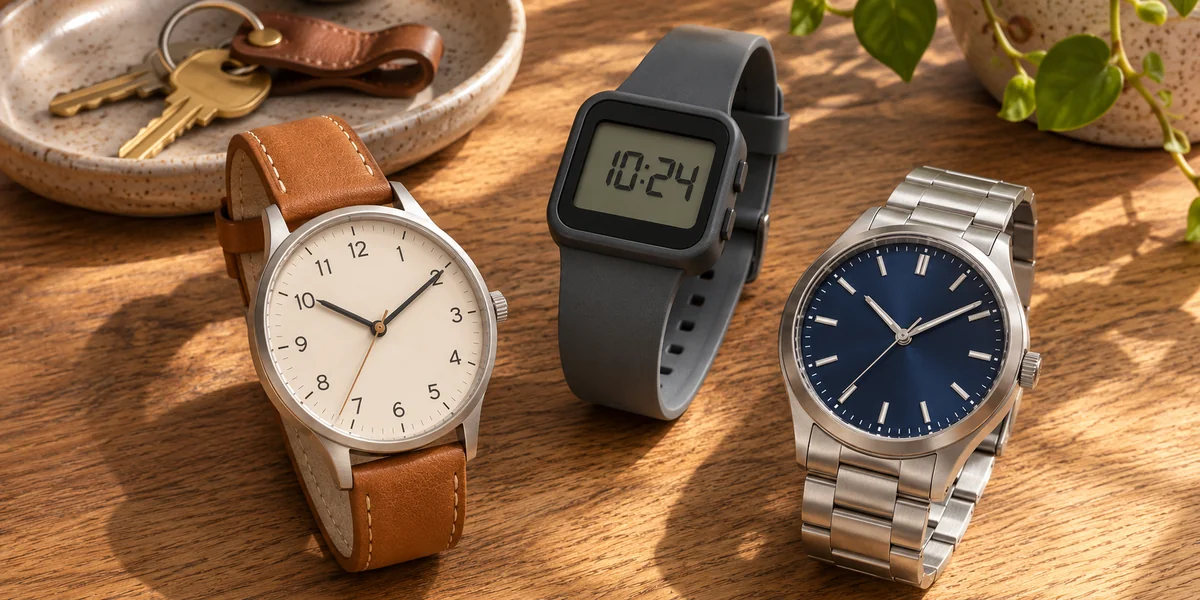
Everyday watches: five movements, displays and wearing routines
Five everyday references spanning automatic, light-powered and conventional quartz operation. Compare the display, strap and maintenance routine with the way you actually spend your day.
Read the guide
No matching guides.
Try a shorter phrase or a different collection, or reset to browse the full list.
Card images are AI-created concepts. Exact products appear in the buying guides.
BEFORE YOU CHOOSE
Make the details useful.
Separate style from mechanism
Dress, field and pilot describe design traditions, while quartz and automatic describe how a watch runs. A watch can fit more than one category. Use those labels to navigate, then check the actual movement and specifications.
Try the proportions
Diameter is only part of fit. Thickness, case shape, strap position and bracelet adjustment change how a watch wears. Decide whether you want a dense display, clear analog dial or connected screen, and how much charging or setting you want to manage.
USEFUL DETAILS
Common questions.
Are all analog watches mechanical?
No. Analog hands can be driven by quartz or mechanical movements.
Where can I learn the movement differences?
The movement article explains common power and ownership routines.
Is a field watch a fixed technical standard?
The label describes a design approach here. Check each model’s actual specifications and intended use.
Can one watch belong to several categories?
Yes. A quartz watch can also be a dress watch or chronograph, for example.
What should I compare for daily wear?
Readability, case and strap fit, controls, maintenance and the conditions you expect to use it in.
Where is a broad everyday shortlist?
The everyday watch guide spans several movements and display styles.