
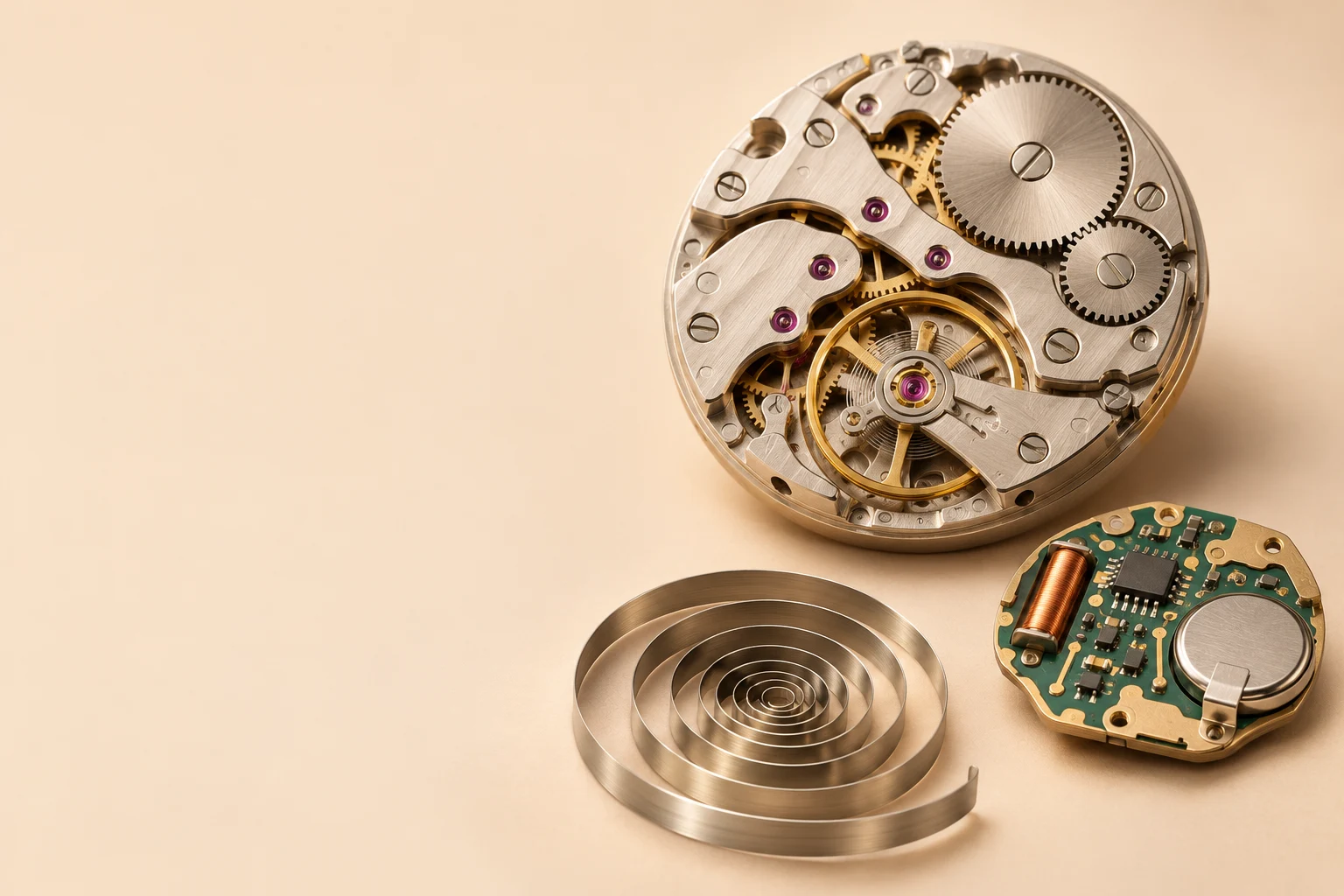
01 / A closer look
Quartz: electrical power and a time reference
A conventional quartz watch uses electrical energy and a quartz time reference. Many models use a replaceable battery; others use a rechargeable store or light-powered system. This usually makes a quartz watch convenient for occasional wear because it can continue running while it sits on a desk. It still needs attention when a battery runs low, a seal is opened or a manufacturer specifies service. The seconds hand is not a complete test of the movement. A once-per-second step is common, but different designs may display time differently. Check the published movement or caliber in the exact watch specification. Our quartz watch guide explains why case, display, water-resistance and seller support matter alongside the movement.
02 / A closer look
Manual mechanical: winding is part of ownership
A manually wound mechanical movement stores energy in a mainspring. The owner turns the crown to add power and the watch runs until that reserve is spent. The winding ritual can be part of the appeal, but it creates a practical obligation when the watch is not worn regularly. Read the instructions for the exact caliber. A screw-down crown may need to be unlocked before winding and secured afterward. Do not force a crown that feels blocked. If the watch stops, you may need to set the time and calendar. The safe sequence for a date display can vary by movement, so use the manufacturer manual rather than an internet rule that assumes every watch behaves alike.
03 / A closer look
Automatic: mechanical with a winding rotor
An automatic watch is still mechanical. A rotor responds to wrist movement and winds the mainspring as the watch is worn. It does not create endless power. A finite reserve means the watch can stop after time off the wrist, and short periods of wear may not replenish the reserve fully. Some automatic calibers also permit hand-winding, while others require a different starting routine. Do not infer this from the word automatic alone. Look up the caliber and its instructions. The watch may need a little manual winding before use, and a calendar can make resetting more involved. Our automatic watch comparison is useful once the ownership routine suits you.
04 / A closer look
Solar describes charging, not the whole movement
Light-powered describes the energy source, not a mechanical escapement. A light-powered quartz watch converts light into stored electrical energy. It can be convenient when exposed to enough light, but a long stay in a dark drawer can drain the reserve. Charging time depends on the model, light level and how depleted it is. Check the manufacturer's charging table rather than assuming a few minutes by a window restores a watch fully. Avoid improvised heat sources or intense lamps that the manual does not recommend. The storage cell and seals can still require service over time. A solar label does not make the watch maintenance-free, nor does it tell you whether the display and strap fit your needs.
05 / A closer look
Compare accuracy and service honestly
A movement category alone is not an accuracy specification. Compare the published tolerance for the exact caliber and understand the period used, such as per day or per month. Mechanical accuracy can vary with winding state, position and magnetism. Quartz watches have their own published limits. A smooth-looking seconds hand or visible gears do not prove greater accuracy. Ask who can service the watch, whether the brand supplies parts and what the warranty actually covers. Battery replacement can be a simple job on some quartz watches, but water-resistant cases need appropriate seal work. Mechanical service is different from routine strap replacement. The cost and availability of service belong in the purchase decision, especially for a watch intended to stay in use for years.
06 / A closer look
Match the movement to your week
For an occasional dress watch, consider how much resetting you will tolerate. For daily wear, consider winding, charging or battery care as part of the morning routine. If you travel, a readable dial and straightforward setting process may matter more than movement prestige. If you work near magnets, check the maker's care advice for the exact watch. Make a shortlist that includes case size, lug-to-lug fit, strap, water-resistance, legibility and service support. Then compare movements within that shortlist. It is reasonable to own different kinds for different occasions. The best choice is the watch whose full design and ownership requirements suit your week.
07 / A closer look
Questions to ask before ordering
Ask the seller for the exact reference and movement or caliber, not only the collection name. Verify whether the watch has a replaceable battery, rechargeable storage, manual winding, hacking seconds, a date and a screw-down crown. Those features differ within broad categories. Read the manual for the setting and care steps you will actually use. Check what is included in the box and how the retailer handles returns. A pre-owned mechanical watch deserves more questions about service history, condition and authenticity. A low price does not answer those questions. Keep a copy of the listing and compare the manufacturer specification with the selected offer before buying.